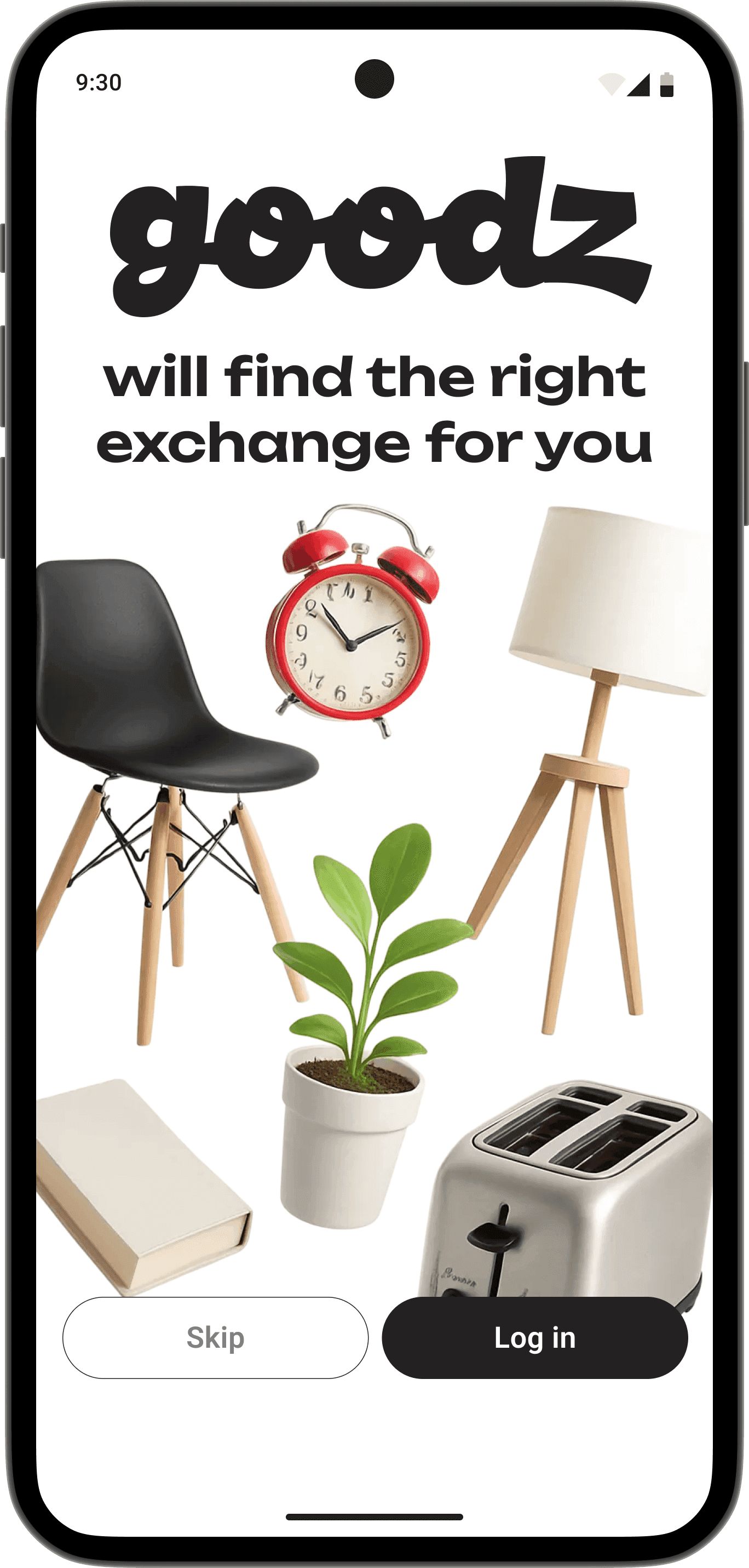
Mobile application for exchanging items based on Material Design 3
Mobile application for exchanging items based on Material Design 3
Mobile application for exchanging items based on Material Design 3
The main difference from classic bulletin boards is the intelligent matching that helps find direct and multilateral barter chains.
The main difference from classic bulletin boards is the intelligent matching that helps find direct and multilateral barter chains.
User Segmentation
User Segmentation
User Segmentation
JTBD Framework
JTBD Framework
JTBD Framework
Target Audience Survey
Target Audience Survey
Target Audience Survey
User Flows
User Flows
User Flows
CJM
CJM
CJM
Wireframes
Wireframes
Wireframes
Prototyping
Prototyping
Prototyping
Content
Content
3
3
3
Context
Context
As part of the study, it was necessary to create a mobile application based on Material Design or Human Interface Guidelines.
As part of the study, it was necessary to create a mobile application based on Material Design or Human Interface Guidelines.
As part of the study, it was necessary to create a mobile application based on Material Design or Human Interface Guidelines.
Since I am an iPhone user myself, I decided that it would be more useful for me to study Material Design, and at the same time it would enhance my understanding of interface design in general, as the Material Design guidelines are like one big instruction manual on interface design.
Since I am an iPhone user myself, I decided that it would be more useful for me to study Material Design, and at the same time it would enhance my understanding of interface design in general, as the Material Design guidelines are like one big instruction manual on interface design.
Since I am an iPhone user myself, I decided that it would be more useful for me to study Material Design, and at the same time it would enhance my understanding of interface design in general, as the Material Design guidelines are like one big instruction manual on interface design.
The idea of the project
The idea of the project
Initially, there was an idea to create a platform where people could exchange services, goods (both used and new) or accumulate internal currency to "purchase" the needed goods/services/items in the future.
Accordingly, behavioral segmentation of the target audience was conducted based on the following:
what they offer (service, goods, item);
how they offer it (remotely or locally);
in what context they use the platform (selling, exchanging, getting rid of excess, etc.).
Based on this segmentation, an analysis was conducted using the JTBD Framework.
However, a survey of 5 people showed that people primarily want to exchange items. An analysis of comments from the potential target audience indicated that the main difficulty in bartering is finding a "symmetrical desire" (you need A, and the owner of A needs not your B), which makes direct exchange challenging.
As a result, I decided to focus on bartering items with a unique feature: an algorithm for direct and multi-sided matching.
Initially, the idea was to create a platform where people could exchange services, goods (used and new), or accumulate internal currency to "purchase" the needed item/service/thing in the future.
Accordingly, behavioral segmentation of the target audience was conducted based on the following:
what they offer (service, good, item);
how they offer it (remotely or locally);
in what context they use the platform (sale, exchange, getting rid of excess, etc.).
Based on this segmentation, an analysis was conducted using the JTBD Framework.
However, surveying 5 people showed that people predominantly want to exchange items. And analyzing comments from the potential target audience revealed that the main difficulty in bartering is finding a “symmetrical desire” (you need A, and the owner of A needs not your B), which makes direct exchange difficult.
As a result, I decided to focus on bartering items with a unique feature: a direct and multi-party matching algorithm.
Initially, there was the idea to create a platform where people could exchange services, goods (used and new), or accumulate internal currency to "buy" the needed product/service/item in the future.
Accordingly, behavioral segmentation of the target audience was carried out based on the following:
what they offer (service, product, item);
how they offer it (remotely or locally);
in what context they use the platform (selling, exchanging, getting rid of excess, etc.).
Based on this segmentation, an analysis was conducted using the JTBD Framework.
However, a survey of 5 people showed that people primarily want to exchange items. Analysis of comments from the potential target audience indicated that the main difficulty in bartering is finding a "symmetrical desire" (you need A, and the owner of A does not need your B), which makes direct exchange challenging.
As a result, I decided to focus on bartering items with a unique feature: a direct and multi-sided matching algorithm.
Problems
Problems
It is difficult for people to find a "symmetric desire" (where someone has what you specifically need, and at the same time they want your item).
Direct exchanges rarely coincide – deals do not happen.
It is difficult for people to find a "symmetric desire" (where someone has what you specifically need, and at the same time they want your item).
Direct exchanges rarely coincide – deals do not happen.
It is difficult for people to find a "symmetric desire" (where someone has what you specifically need, and at the same time they want your item).
Direct exchanges rarely coincide – deals do not happen.
Tasks
Tasks
Define the core idea of the product
Segment the target audience
Formulate key user tasks (Jobs-to-be-Done)
Develop user scenario exchanges
Develop a system of statuses and actions
Create the structure and UX logic of the MVP
Develop a visual interface system based on Material Design 3 (Material You)
Form a design system
Verify the logic at the prototype level
Define the core idea of the product
Segment the target audience
Formulate key user tasks (Jobs-to-be-Done)
Develop user scenario exchanges
Develop a system of statuses and actions
Create the structure and UX logic of the MVP
Develop a visual interface system based on Material Design 3 (Material You)
Form a design system
Verify the logic at the prototype level
survey of 5 respondents → identification of key needs
survey of 5 respondents → identification of key needs
I conducted a survey among 5 people and formulated hypotheses. The conclusions from the survey results were as follows:
I conducted a survey among 5 people and formulated hypotheses. The conclusions from the survey results were as follows:
I conducted a survey among 5 people and formulated hypotheses. The conclusions from the survey results were as follows:
More important is the equivalence of the exchange.
Most people (60%) want to exchange for goods.
Only 20% fear fraud, while 80% are concerned about unequal exchanges.
Regarding equivalence: 60% believe that the average value across all offers would help understand how much the exchanged item is worth.
More important is the equivalence of the exchange.
Most people (60%) want to exchange for goods.
Only 20% fear fraud, while 80% are concerned about unequal exchanges.
Regarding equivalence: 60% believe that the average value across all offers would help understand how much the exchanged item is worth.
More important is the equivalence of the exchange.
Most people (60%) want to exchange for goods.
Only 20% fear fraud, while 80% are concerned about unequal exchanges.
Regarding equivalence: 60% believe that the average value across all offers would help understand how much the exchanged item is worth.
The main needs according to the survey results
The main needs according to the survey results
The main needs according to the survey results
exchange for goods
exchange for goods
exchange for goods
equivalence of exchange
equivalence of exchange
equivalence of exchange
average cost
average cost
average cost
Analysis of the needs and pain points of the target audience using Reddit and the main hypotheses
Analysis of the needs and pain points of the target audience using Reddit and the main hypotheses
In the context of limited data on Reddit, I found several threads on the topic of bartering, "fed" these pages to ChatGPT, and asked for general conclusions, advantages, and limitations of bartering.
In the context of limited data on Reddit, I found several threads on the topic of bartering, "fed" these pages to ChatGPT, and asked for general conclusions, advantages, and limitations of bartering.
In the context of limited data on Reddit, I found several threads on the topic of bartering, "fed" these pages to ChatGPT, and asked for general conclusions, advantages, and limitations of bartering.
The difficulty in finding a "symmetrical desire" (you need A, and the owner of A needs not your B), which makes direct exchange challenging.
The difficulty in finding a "symmetrical desire" (you need A, and the owner of A needs not your B), which makes direct exchange challenging.
Barter can be perceived as an unequal exchange, especially if the value of services is subjective.
Barter can be perceived as an unequal exchange, especially if the value of services is subjective.
Key needs based on the analysis of comments
Key needs based on the analysis of comments
Key needs based on the analysis of comments
matching, including multilateral
matching, including multilateral
matching, including multilateral
equivalence of exchange
equivalence of exchange
equivalence of exchange
average cost
average cost
average cost
Key UX tasks
Key UX tasks
Make the process of finding a match simple.
Make the process of finding a match simple.
Make the process of finding a match simple.
Implement a multi-sided matching algorithm (chain).
Implement a multi-sided matching algorithm (chain).
Implement a multi-sided matching algorithm (chain).
Enable the determination of the average cost of an item.
Enable the determination of the average cost of an item.
Enable the determination of the average cost of an item.
CJM: Exchange item for item
CJM: Exchange item for item
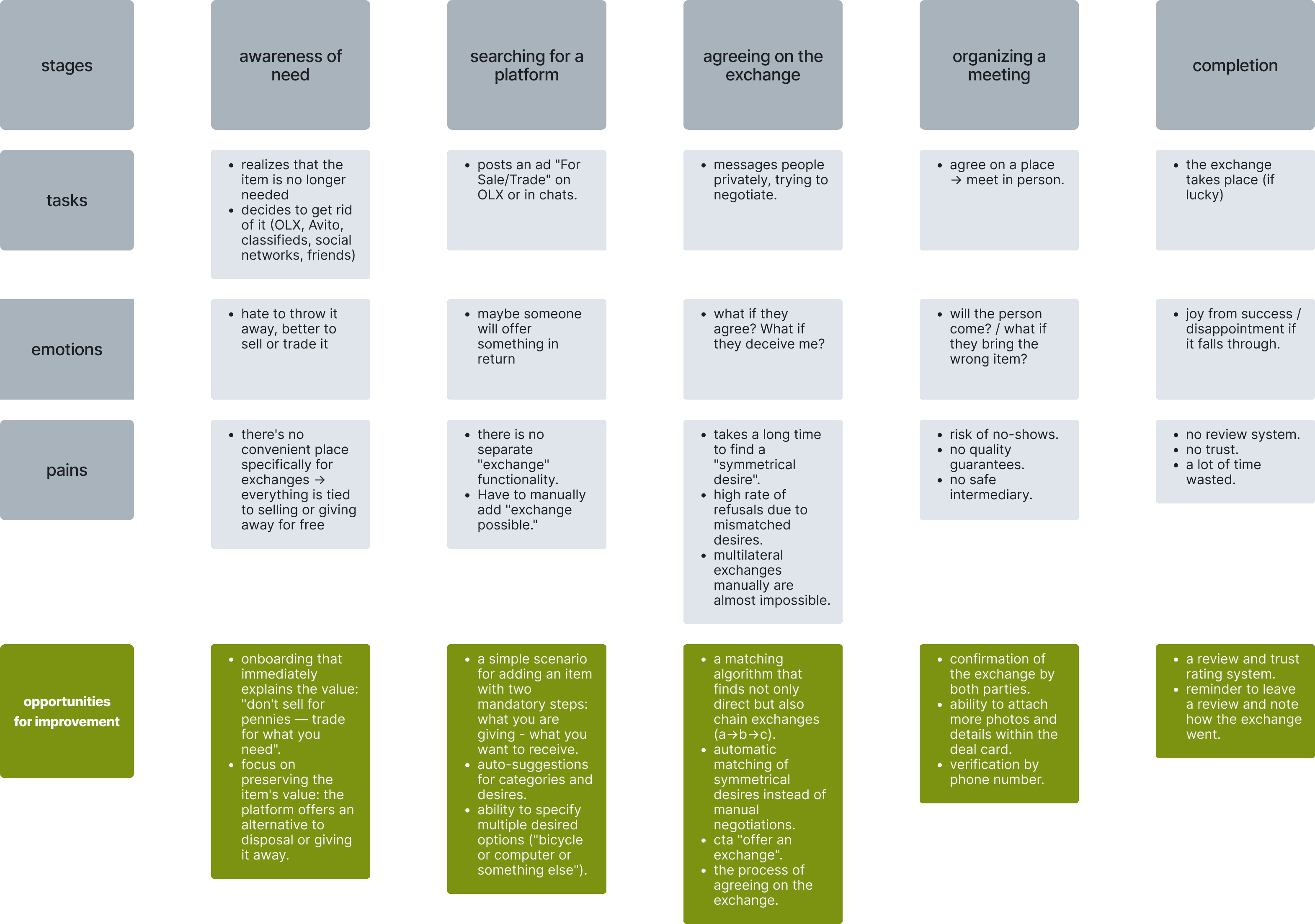
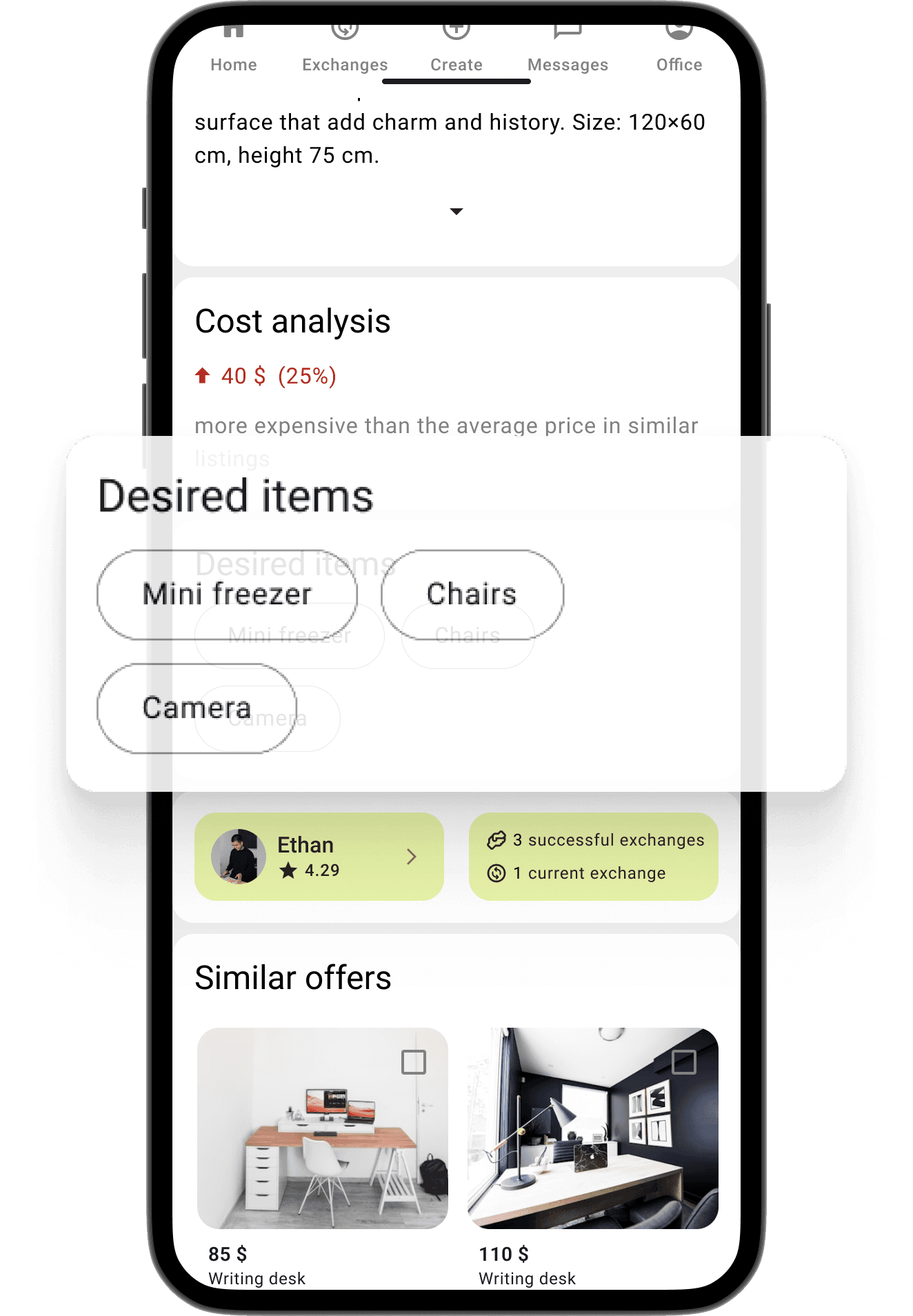
The desired things are visible in each advertisement.
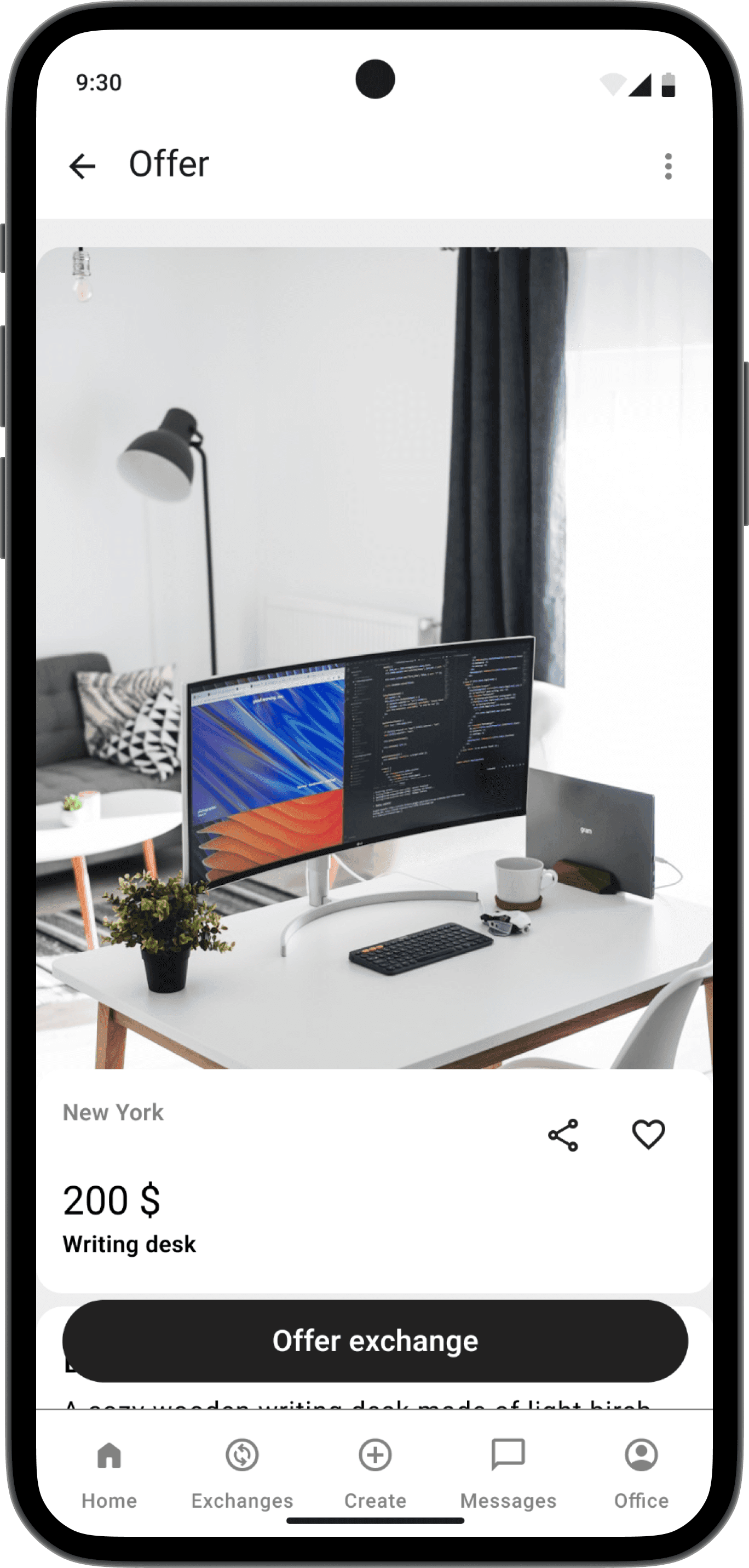
The desired things are visible in each advertisement.
The desired things are visible in each advertisement.

Smart suggestions generate hints based on the user's input data.
Smart suggestions generate hints based on the user's input data.
Smart suggestions generate hints based on the user's input data.
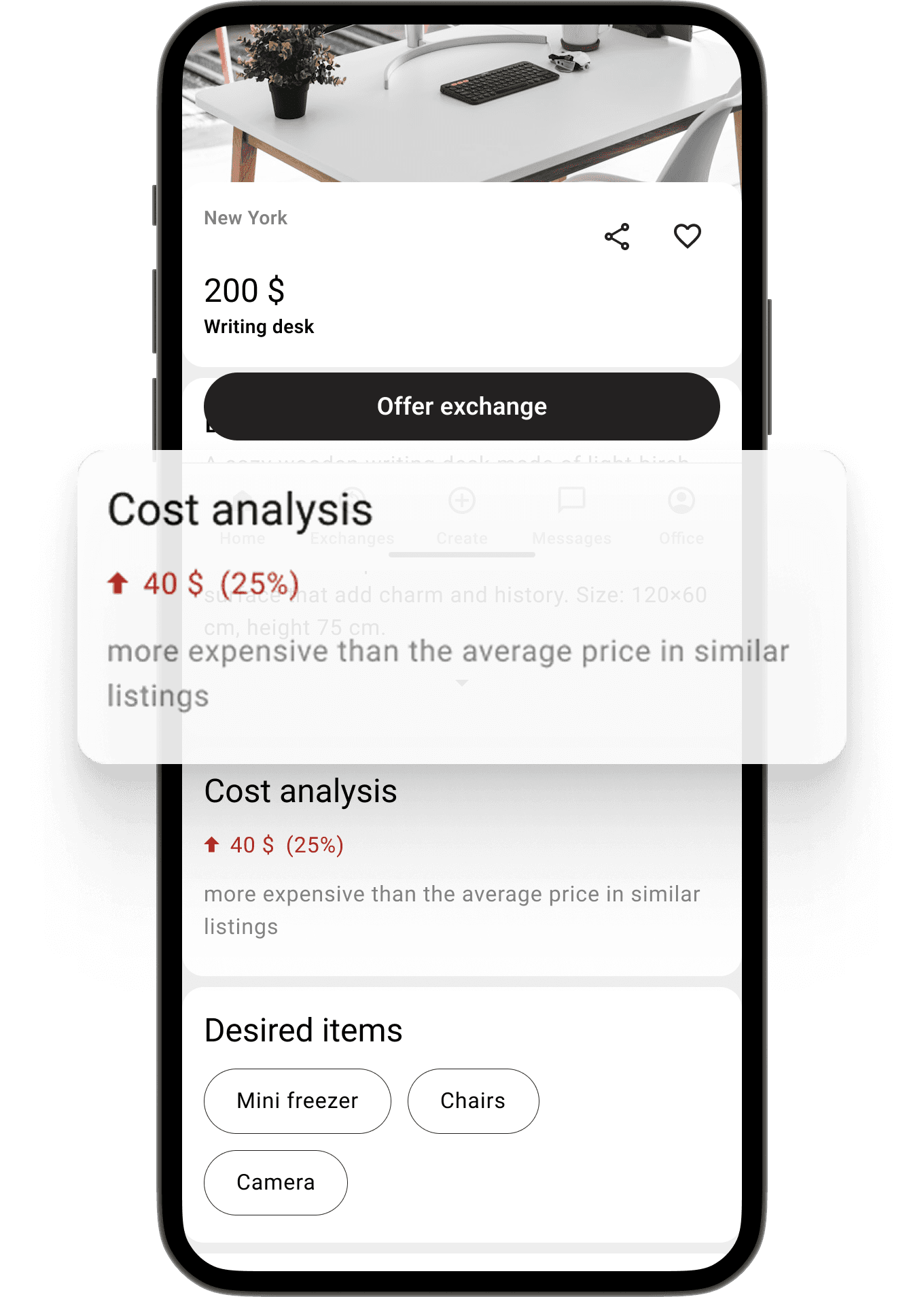
The average cost helps to determine whether the exchange is equivalent.
The average cost helps to determine whether the exchange is equivalent.
The average cost helps to determine whether the exchange is equivalent.
User Flows
User Flows
Main scenarios
Main scenarios
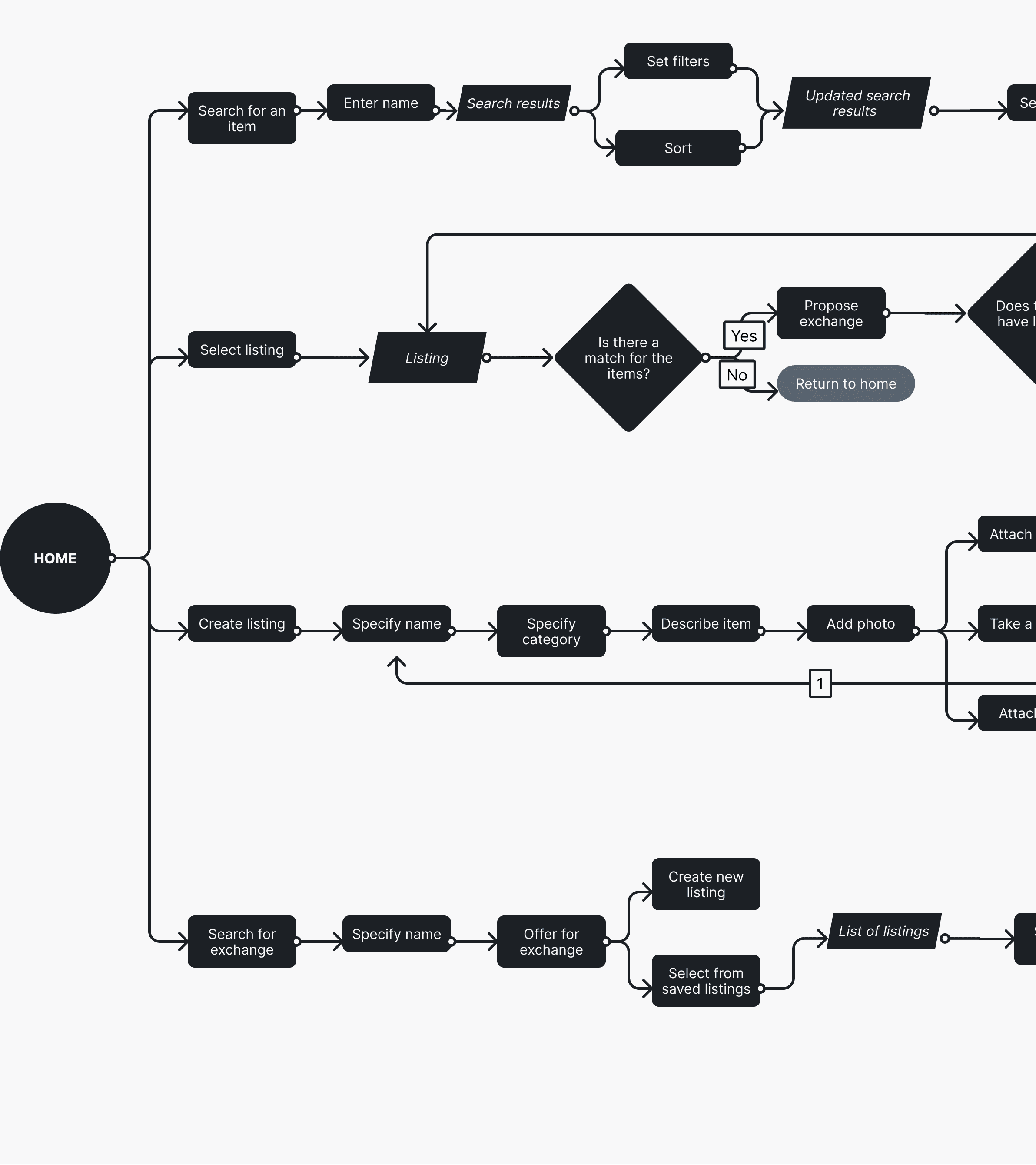
3 main ways to find an exchange
3 main ways to find an exchange
Searching for an interesting item among all listings
Searching for an interesting item among all listings
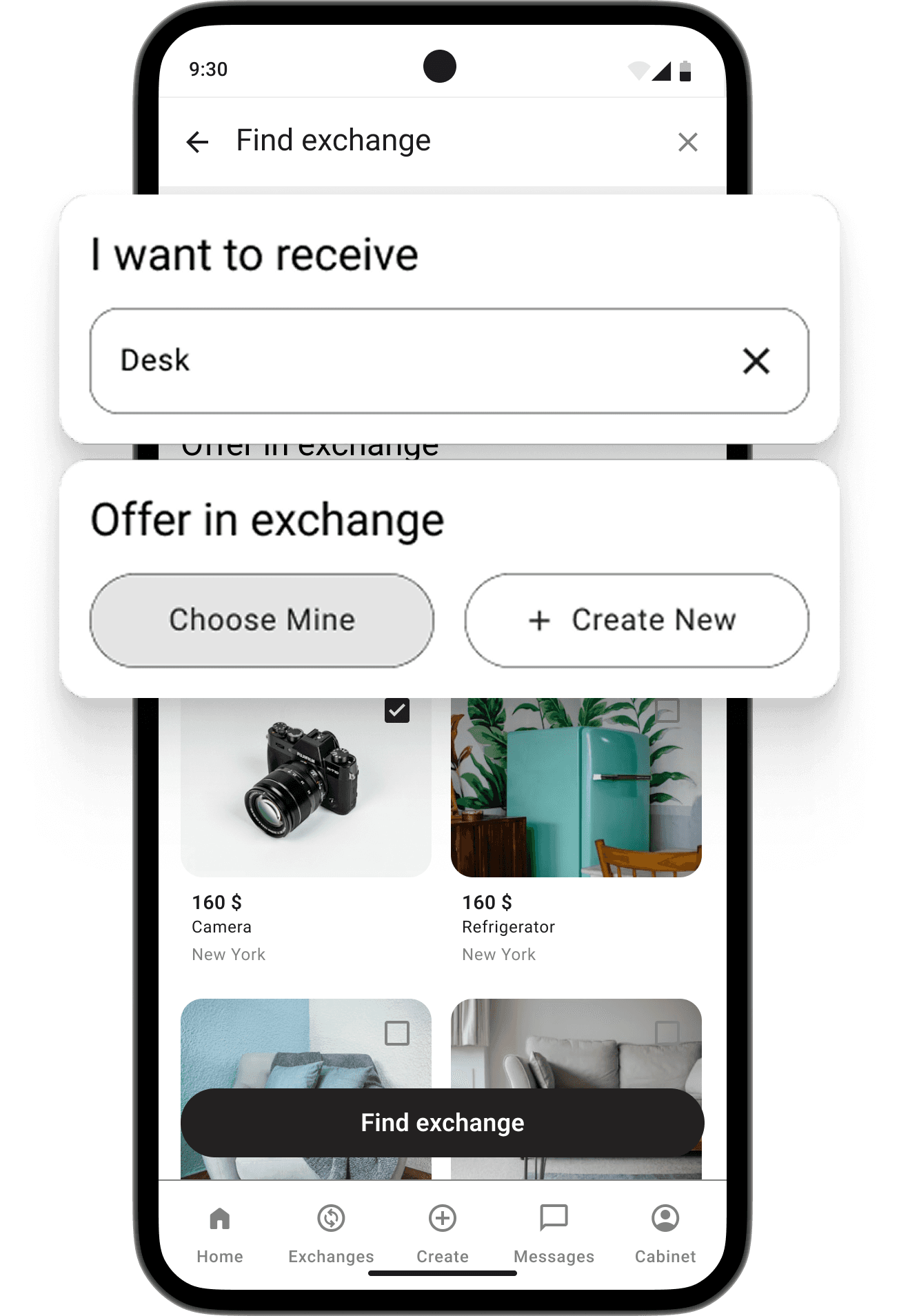
The application will suggest exchange options based on user requests.
The application will suggest exchange options based on user requests.
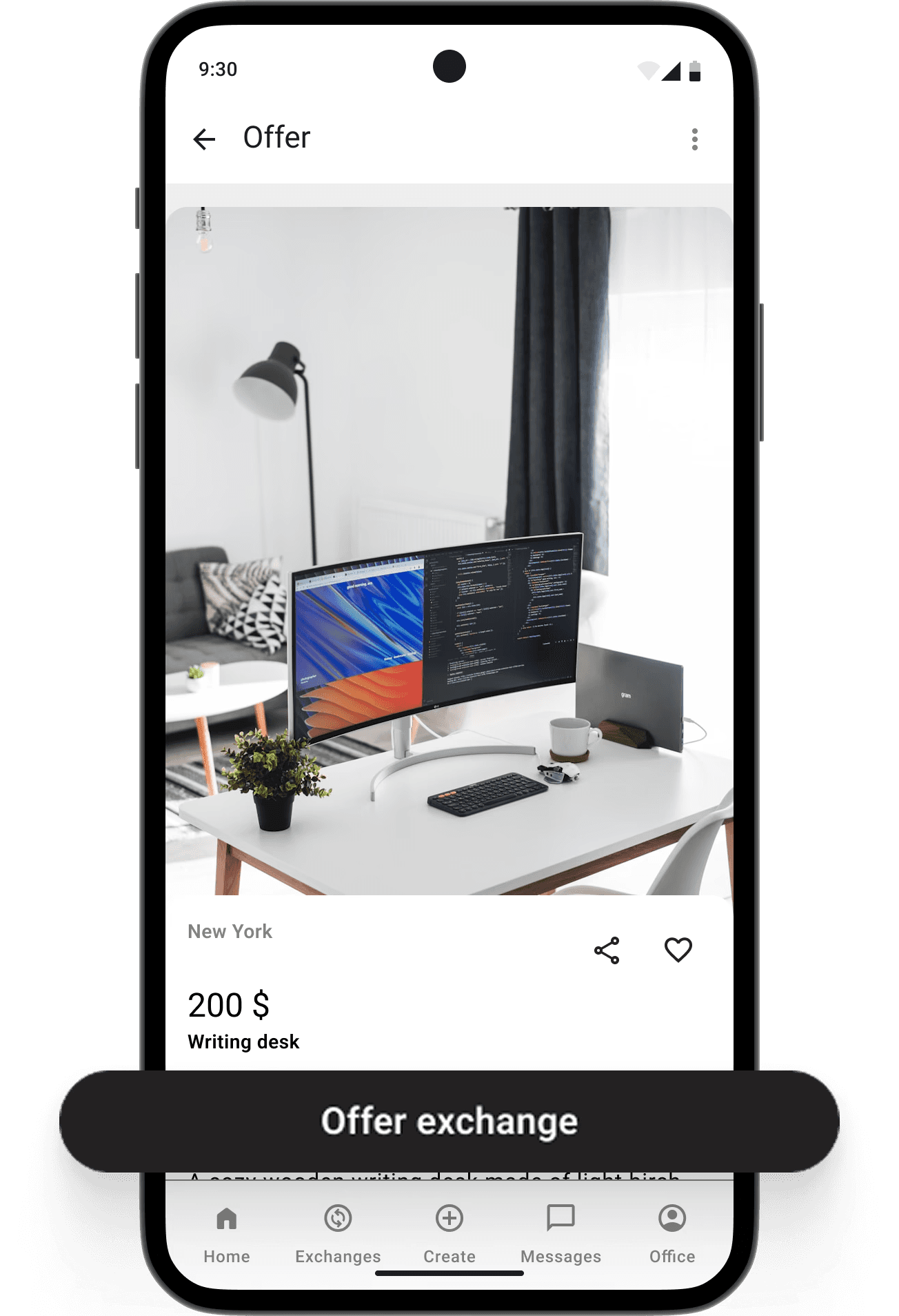
You can suggest an exchange from the ad card.
You can suggest an exchange from the ad card.
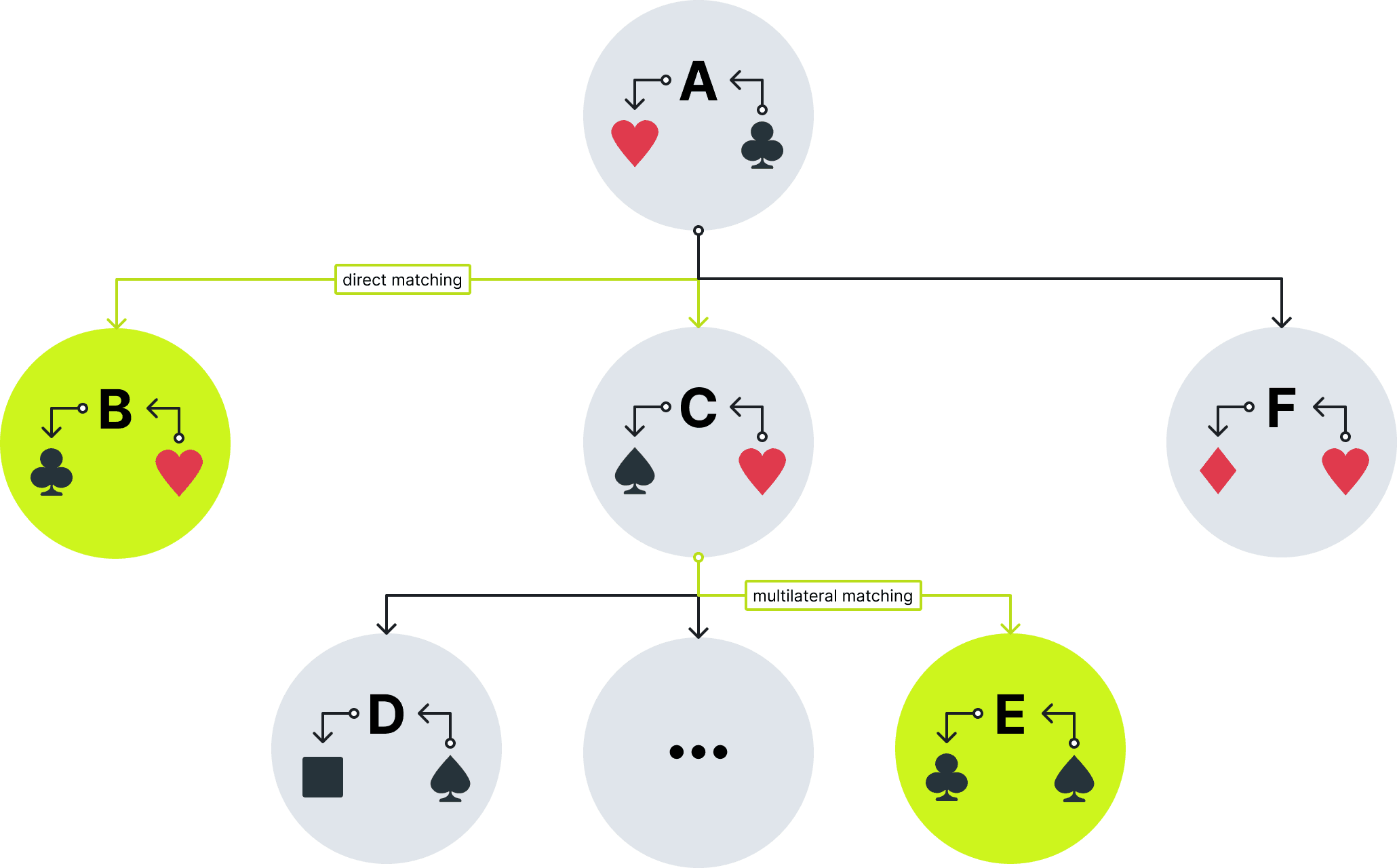
Multi-Sided Matching Algorithm
Multi-Sided Matching Algorithm
Length limit of the circle
Length limit of the circle
Length limit of the circle
In order to maintain speed and clarity, Goodz searches for closed exchange circles consisting of up to 3–4 participants. The search proceeds in layers: “what do I need → who offers it → what does he need → who offers it…”.
As soon as the last participant needs my item — the circle is complete.
If there is no closure at the 4th step, the search stops as ineffective for the current set of ads.
To maintain speed and clarity, Goodz looks for closed loops of exchange involving up to 3-4 participants. The search goes in layers: "what do I need → who offers it → what does he need → who offers it...".
As soon as the last participant needs my item — the loop is closed.
If there is no closure at the 4th step, the search stops as ineffective for the current set of listings.
In order to maintain speed and clarity, Goodz searches for closed exchange circles consisting of up to 3–4 participants. The search proceeds in layers: “what do I need → who offers it → what does he need → who offers it…”.
As soon as the last participant needs my item — the circle is complete.
If there is no closure at the 4th step, the search stops as ineffective for the current set of ads.
UX solutions
UX solutions
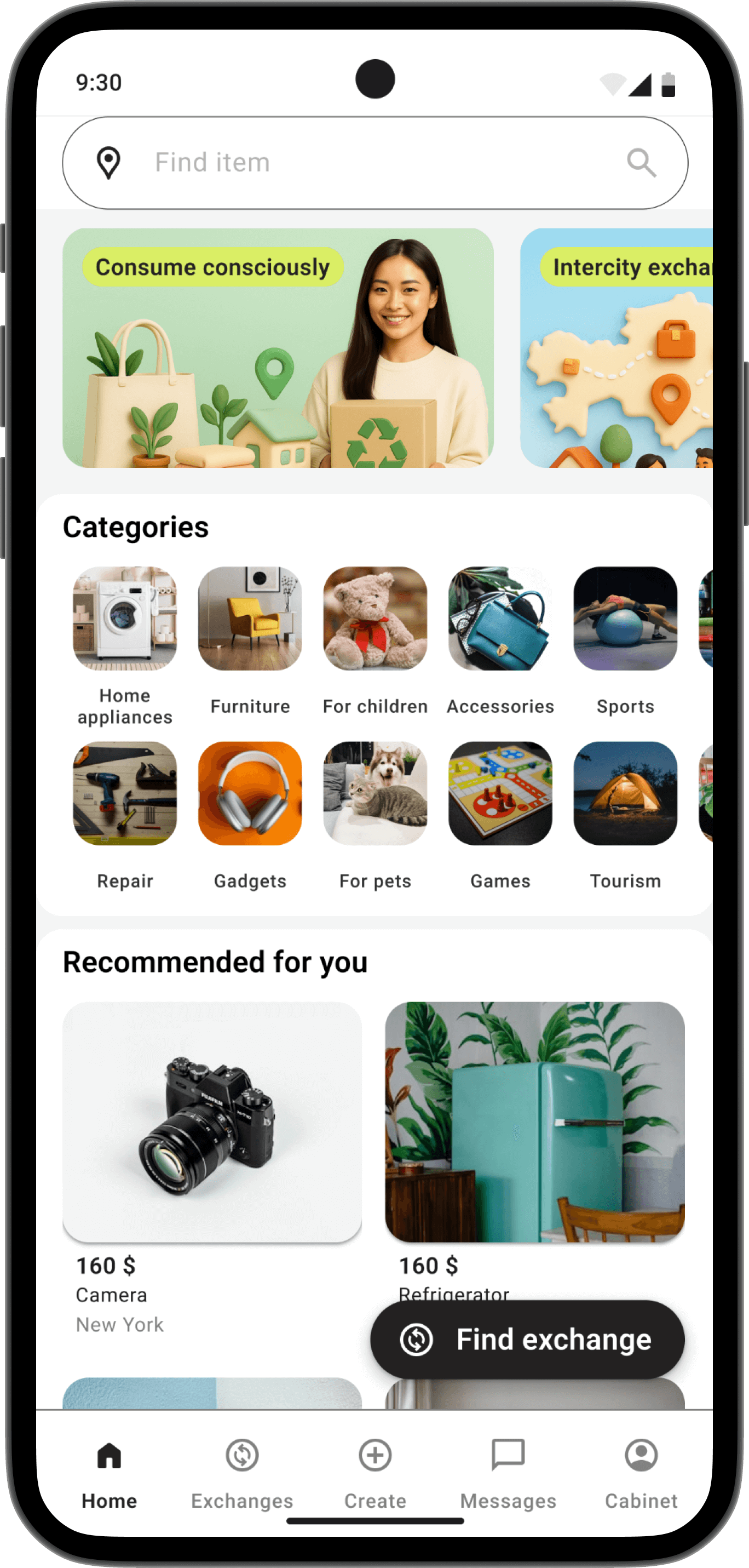
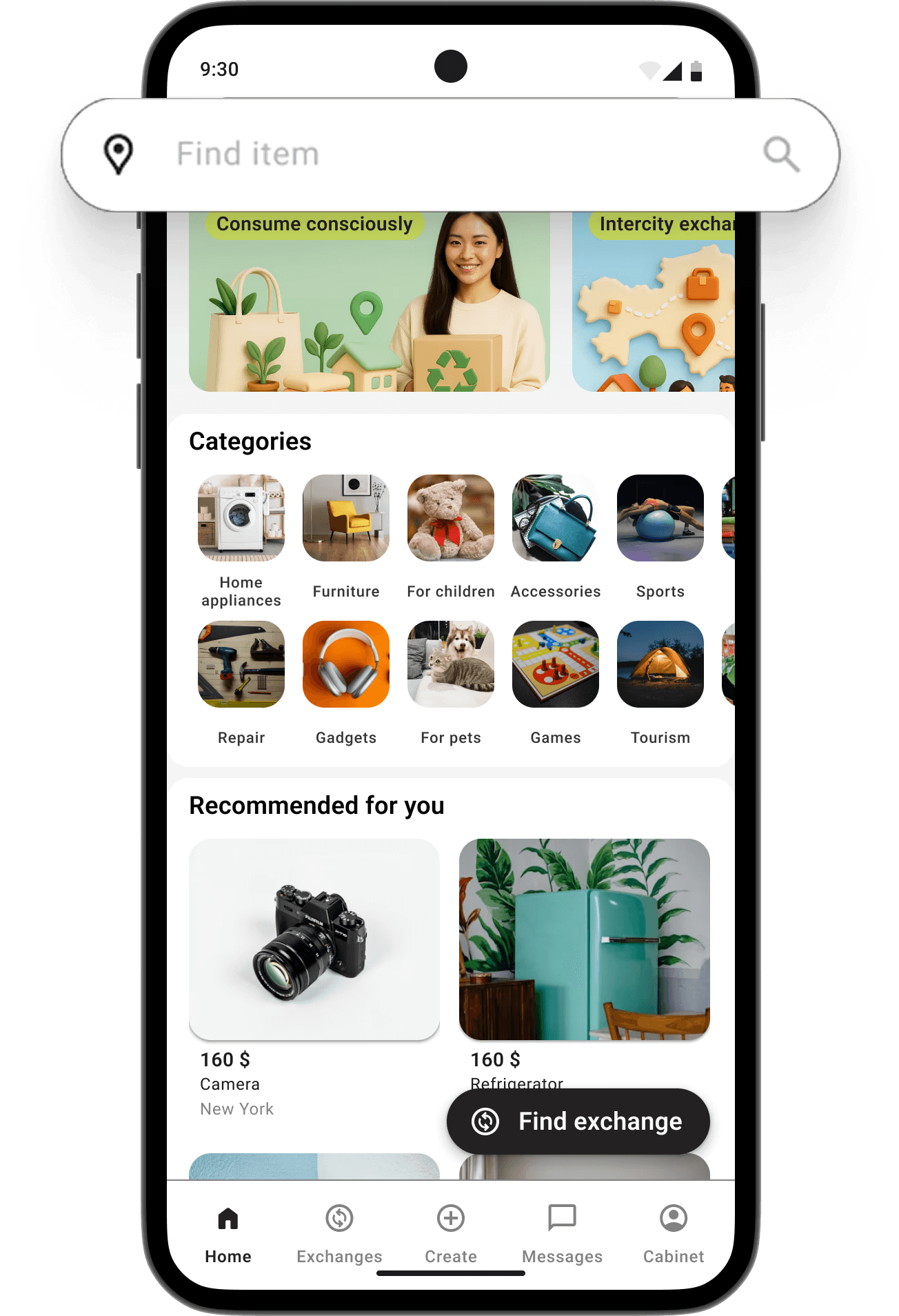
FAB for quick launch of exchange search: "What I need - What I give".
Auto-suggestions when searching (dynamic search by keywords, Smart Predictive Search).
Section "Exchanges": all deals with statuses, chains, history of stages.
Multilateral matching: the algorithm connects participants in closed loops (for example, A → B → C → A).
FAB for quick launch of exchange search: "What I need - What I give".
Auto-suggestions when searching (dynamic search by keywords, Smart Predictive Search).
Section "Exchanges": all deals with statuses, chains, history of stages.
Multilateral matching: the algorithm connects participants in closed loops (for example, A → B → C → A).
FAB for quick launch of exchange search: "What I need - What I give".
Auto-suggestions when searching (dynamic search by keywords, Smart Predictive Search).
Section "Exchanges": all deals with statuses, chains, history of stages.
Multilateral matching: the algorithm connects participants in closed loops (for example, A → B → C → A).
UX solutions in the Exchanges section
UX solutions in the Exchanges section
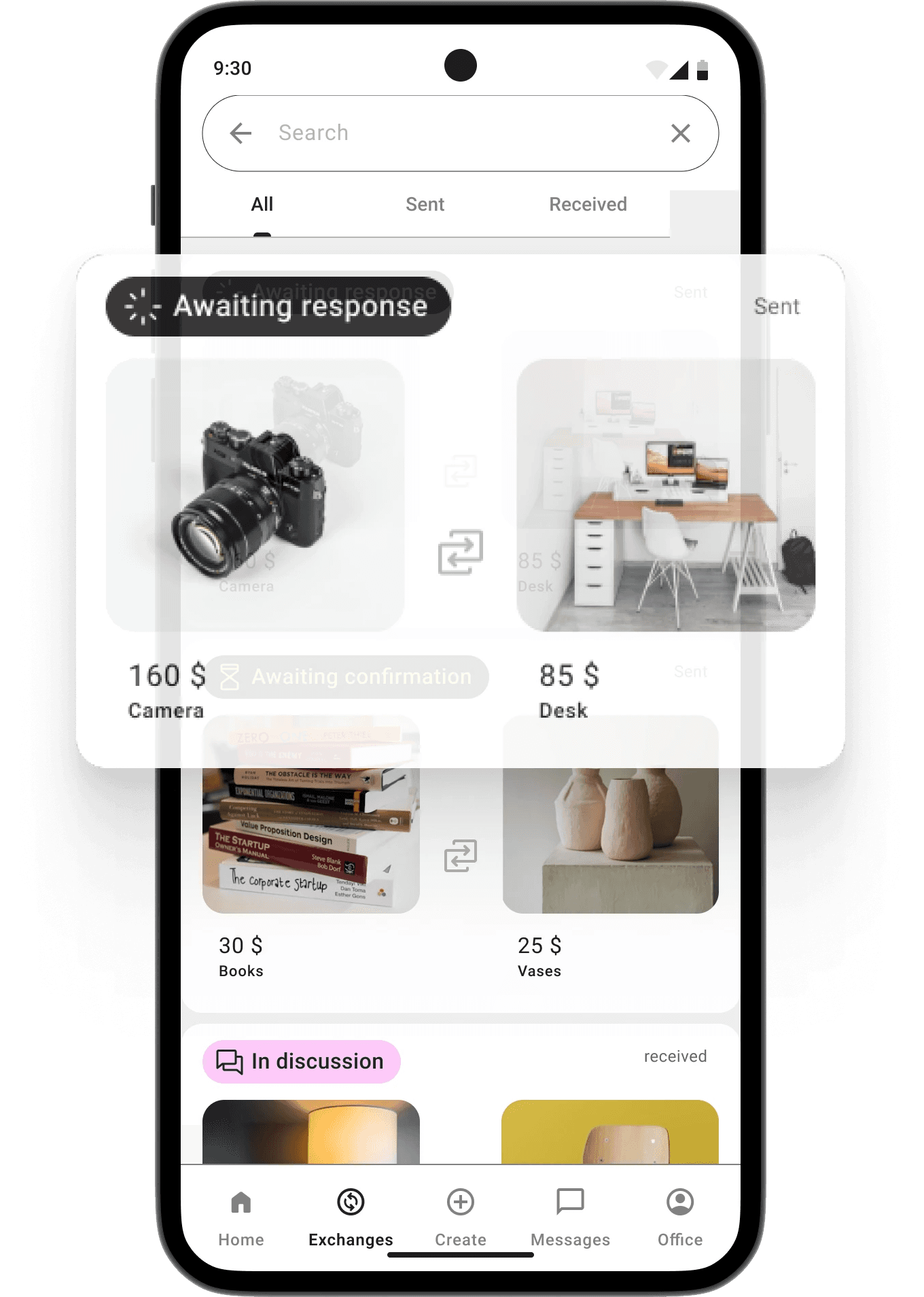
All exchanges have a current status.
All exchanges have a current status.
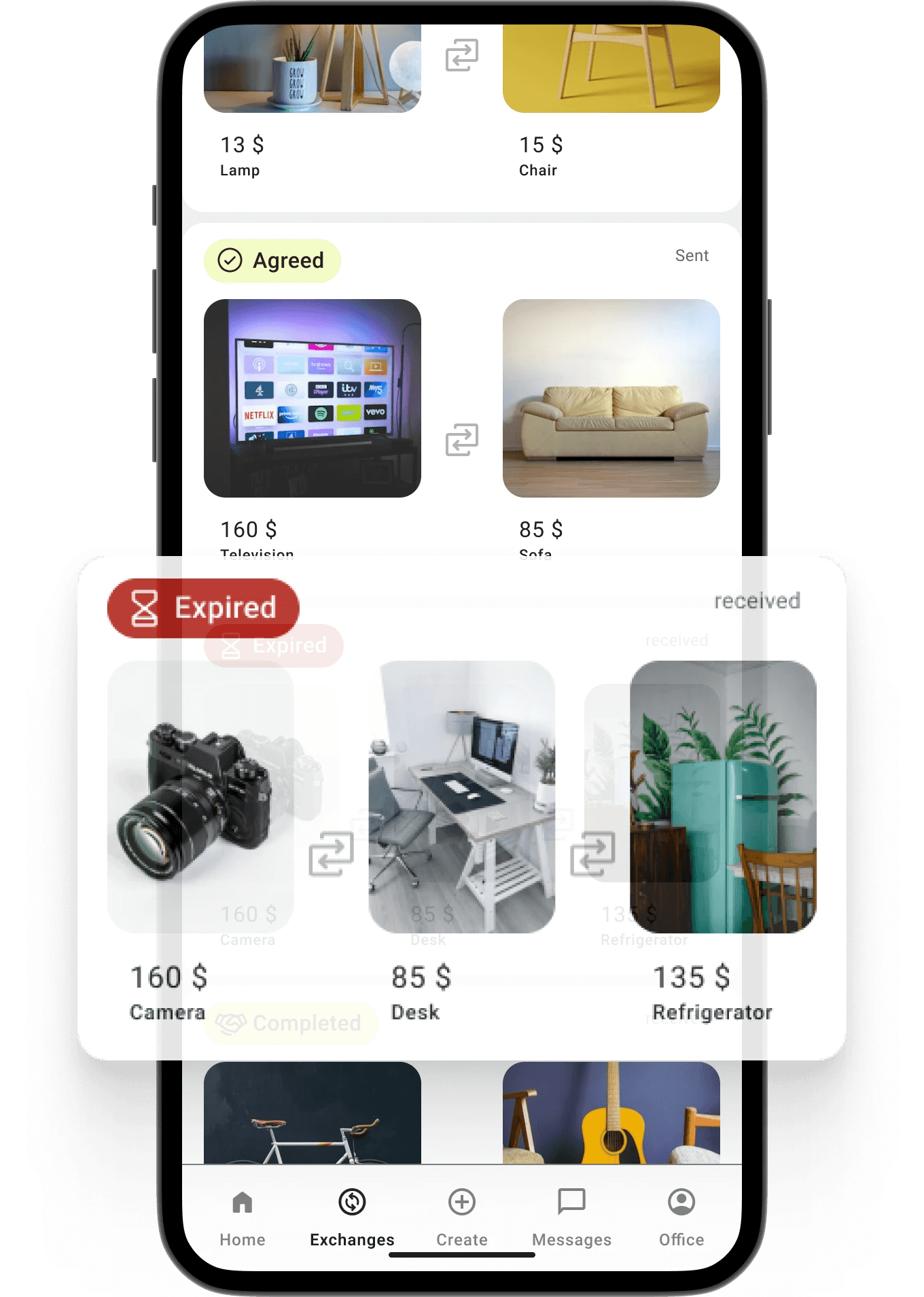
Exchange cards are divided into direct and multilateral.
Exchange cards are divided into direct and multilateral.
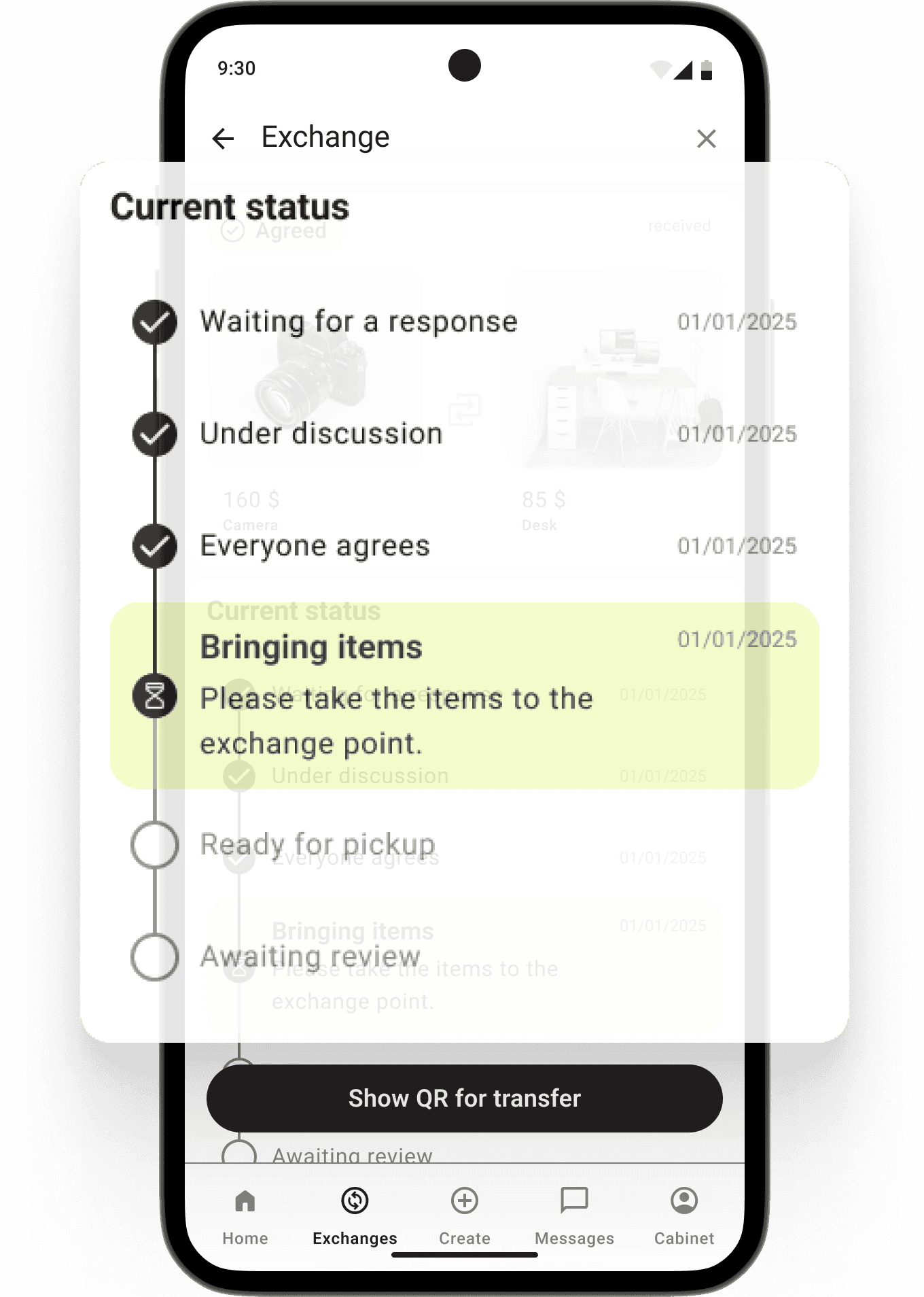
In each exchange, you can see the current stage of the exchange.
In each exchange, you can see the current stage of the exchange.
Project results
Project results
Changes and effect
Changes and effect
Changes and effect
After implementing the matching algorithm and the new transaction scenario, Goodz became not just a bulletin board, but a system that automatically connects users in exchange chains.
The mechanics of the “closed loop” will allow:
To increase the number of successful exchanges (without manual negotiations);
To reduce the average time to find a suitable exchange from several days to a few minutes;
Transactions will become clearer: users see one screen with a clear status and progress of the exchange.
After implementing the matching algorithm and the new transaction scenario, Goodz became not just a bulletin board, but a system that automatically connects users in exchange chains.
The mechanics of the “closed loop” will allow:
To increase the number of successful exchanges (without manual negotiations);
To reduce the average time to find a suitable exchange from several days to a few minutes;
Transactions will become clearer: users see one screen with a clear status and progress of the exchange.
Personal insights and professional growth
Personal insights and professional growth
Personal insights and professional growth
The Goodz project became for me an experience in designing a complex algorithmic UX, where it is important to combine logic, mathematics, and ease of perception.
2. I learned:
to translate complex models (multilateral cycles) into an understandable user interface;
to balance between system speed and visual simplicity;
to work with the material of the Android ecosystem and Material Design 3;
to design the transaction process as a single screen with statuses, actions, and confirmations.
The Goodz project became for me an experience in designing a complex algorithmic UX, where it is important to combine logic, mathematics, and ease of perception.
2. I learned:
to translate complex models (multilateral cycles) into an understandable user interface;
to balance between system speed and visual simplicity;
to work with the material of the Android ecosystem and Material Design 3;
to design the transaction process as a single screen with statuses, actions, and confirmations.
The Goodz project became for me an experience in designing a complex algorithmic UX, where it is important to combine logic, mathematics, and ease of perception.
2. I learned:
to translate complex models (multilateral cycles) into an understandable user interface;
to balance between system speed and visual simplicity;
to work with the material of the Android ecosystem and Material Design 3;
to design the transaction process as a single screen with statuses, actions, and confirmations.